The Highest Trekking Peak in Nepal
 byBy Suman Neupane
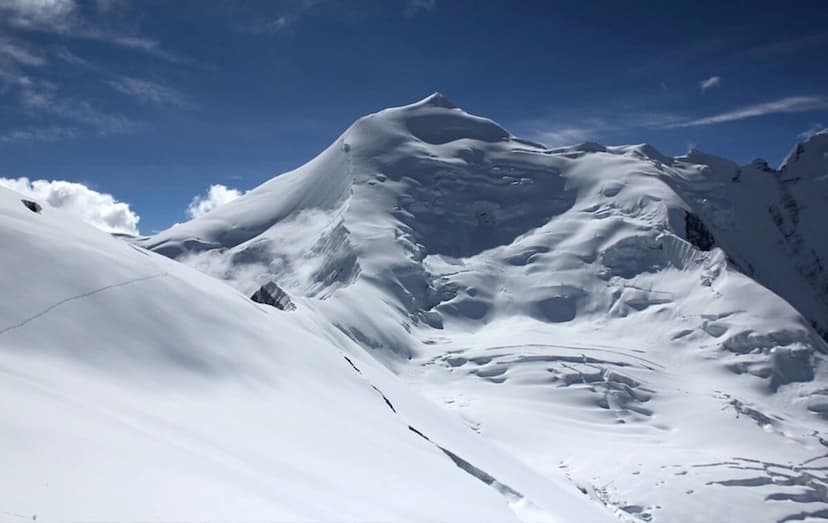
Standing at 6,476 meters (21,247 ft), Mera Peak is the highest trekking peak in Nepal and one of the country's most widespread climbing destinations. Located in the remote Hinku Valley of the between Everest and Makalu region, Mera Peak offers an farfetched combination of high-altitude trekking, mountaineering experience, and breathtaking panoramic views of the world's highest mountains.
Unlike technical alpine climbs, Mera Peak is measured a non-technical trekking peak, making it an brilliant choice for trekkers who want to experience Himalayan mountaineering for the first time. With proper acclimatization, physical fitness, and guidance from experienced climbing guides, Mera Peak is realizable for anyone with previous trekking experience.
Where is Mera Peak?
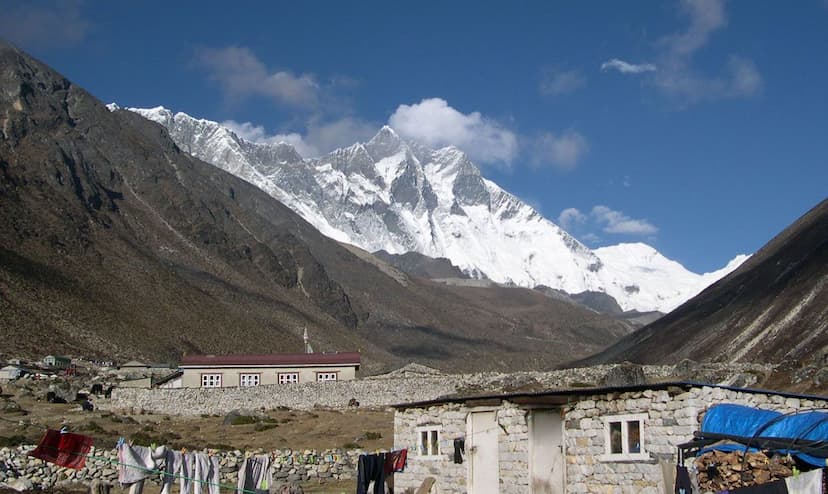
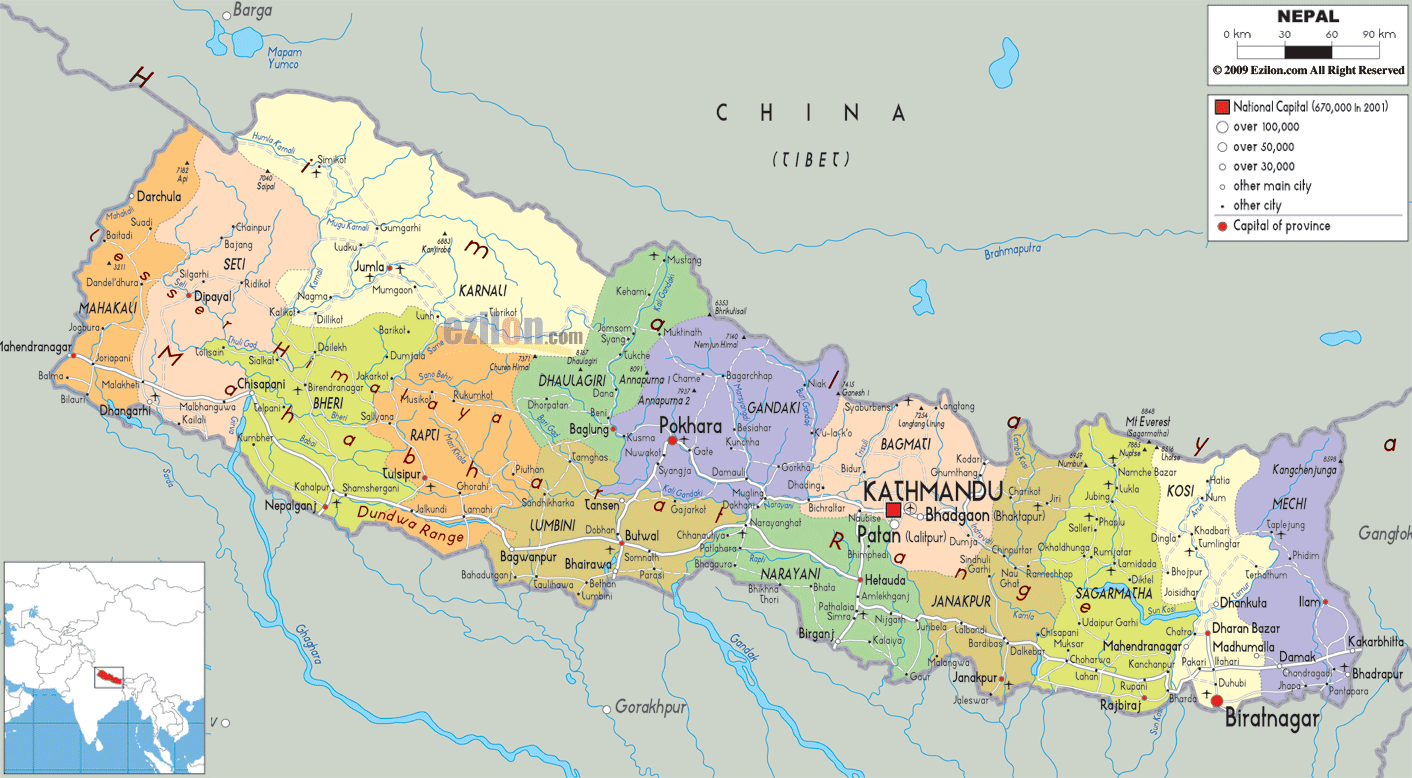
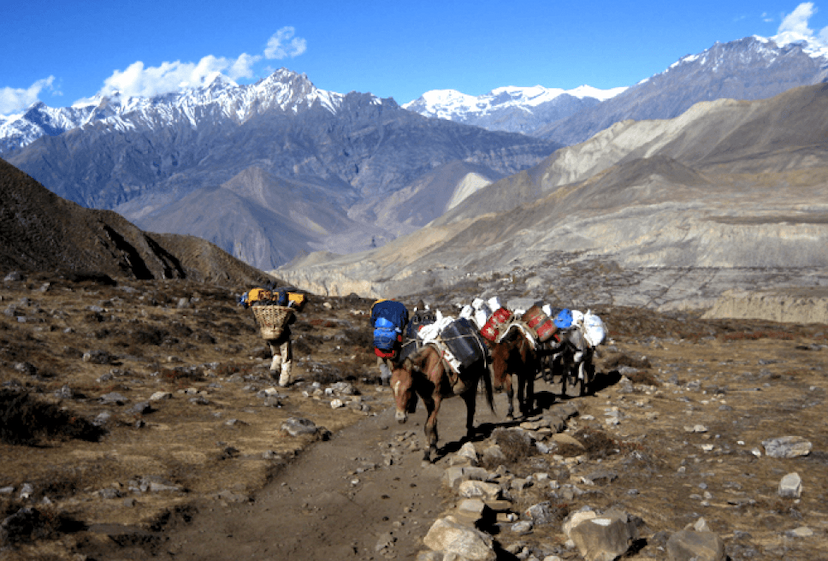
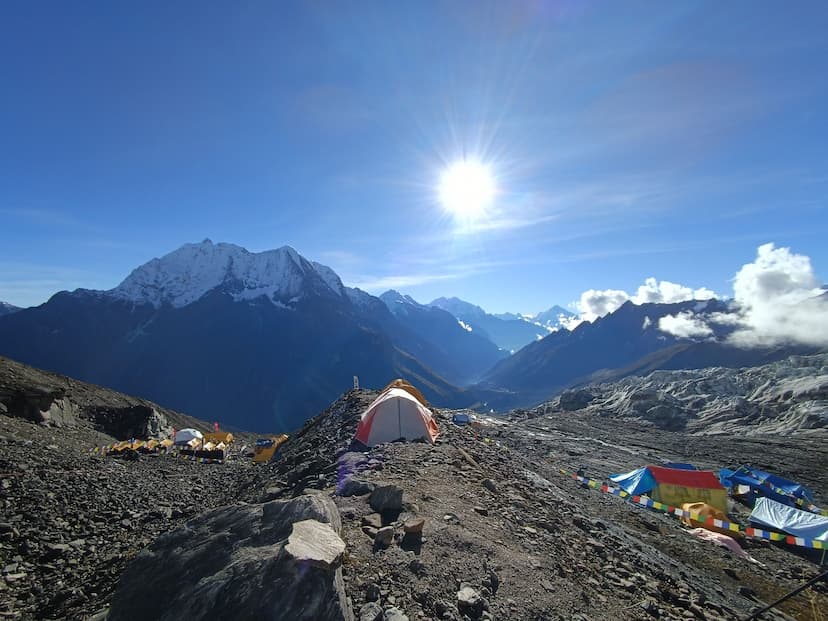
Mera Peak lies within the Makalu Barun National Park in the Solukhumbu district of eastern Nepal. The mountain is located south of Mount Everest and is accessed through the beautiful and less-crowded Hinku Valley. Most expeditions begin with a scenic flight from Kathmandu or Ramechhap to Lukla, followed by several days of trekking through traditional Sherpa villages, rhododendron forests, alpine meadows, and glacial landscapes before reaching Mera Peak Base Camp. Alternatives, drive from Kathmandu to Sallery/phaplu continues drive to Kharikhola by jeep and trek through Pangsang Pass to reach Khare Camp.
Climbing Route and Camps
The standard route follows the Mera La Route, which is straightforward and relatively safe compared to other Himalayan climbing routes.
A typical itinerary includes:
- Flight to Lukla
- Trek through Paiya, Panggom, Ningsow, Chhatra Khola, Kothe, Thangnak, and Khare or over the Ze-trala pass
- Acclimatization and climbing training in Khare
- Trek to Mera High Camp (5,780 m)
- Summit Mera Peak (6,476 m) and descend to Khare
- Return trek to Lukla
- Flight back to Kathmandu
Some climbers also combine Mera Peak with the challenging Amphu Laptsa Pass and Island and Lobuche Peak for a longer and more adventurous expedition.
Technical Difficulty
Although Mera Peak is categorized as a trekking peak by the Nepal Mountaineering Association, climbers should not underestimate the challenge. The climb involves:
- Walking on glaciers
- Using crampons
- Climbing with an ice axe
- Rope travel
- Ascending fixed ropes if necessary
- High-altitude endurance
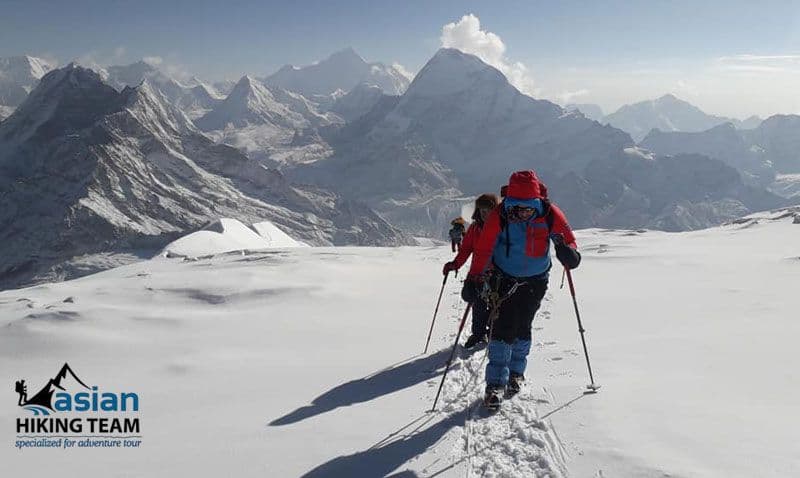
The final summit day is long, often requiring 10–12 hours of climbing. Most of the ascent is on snow and moderate glacier slopes of around 30–40 degrees. The last section before the summit can become steeper depending on snow conditions. Basic mountaineering skills are usually taught by climbing guides before the summit attempt.
Acclimatization
Proper acclimatization is the key to a successful Mera Peak climb. Since the summit is over 6,400 meters, spending adequate time adapting to the altitude greatly increases the chance of success and reduces the risk of Acute Mountain Sickness (AMS). Most itineraries include two or three acclimatization days, particularly in Khare, where climbers also receive training in using climbing equipment.
Best Time to Climb Mera Peak
-
Spring (March to May) Stable weather Warmer temperatures Excellent mountain views Blooming rhododendron forests
-
Autumn (September to November) Clear skies Dry trails Stable climbing conditions Best visibility
Mountain Views from the Summit
One of the greatest rewards of climbing Mera Peak is the extraordinary panoramic view from the summit. On a clear day, climbers can see five of the world's fourteen 8,000-meter peaks, including:
- Mount Everest (8,848.86 m)
- Lhotse (8,516 m)
- Makalu (8,485 m)
- Cho Oyu (8,188 m)
- Kangchenjunga (8,586 m) In addition, countless other Himalayan peaks stretch across the horizon, creating one of the finest mountain panoramas in Nepal.
Required Permits
- Mera Peak Climbing Permit
- Makalu Barun National Park Entry Permit
- Local Rural Municipality Permit
Asian Hiking Team a local trekking agency usually arranges all necessary permits before the expedition begins.
Climbing Equipment
- Mountaineering boots
- Crampons
- Ice axe
- Climbing harness
- Helmet
- Carabiners
- Ascender and descender
- Warm down jacket
- Waterproof shell clothing
- Sleeping bag rated for -30°C
- Headlamp
- Glacier sunglasses
- Trekking poles
Transportation
The journey normally begins with a domestic flight to Lukla. During peak trekking seasons, flights often operate from Ramechhap Airport due to heavy air traffic in Kathmandu. After completing the climb, trekkers return to Lukla and fly back to Kathmandu. In recent years, some trekkers have also chosen to drive to Salleri or Phaplu continues drive to Kharikhola and trek to Lukla/Pangoma pass, avoiding possible flight delays.
Why Climb with an Experienced Local Guide?
Although Mera Peak is one of Nepal's easiest trekking peaks, climbing above 6,000 meters requires careful planning, proper acclimatization, and experienced leadership.
- Climbing instruction and safety training
- Route finding on glaciers
- Fixed rope management when required
- Weather assessment
- Emergency response and altitude management
- Logistical support throughout the expedition
- Experienced Sherpa guides significantly improve both safety and summit success.
Opinions
Mera Peak is the ideal introduction to Himalayan mountaineering. It combines spectacular trekking through remote valleys, exciting glacier travel, and the unforgettable achievement of standing on a 6,476-meter Himalayan summit. Whether you are preparing for higher mountains such as Island Peak, Lobuche Peak, Ama Dablam, or even Mount Everest, Manaslu, Makalu, Annapurna, Chulu East. Mera Peak provides the perfect opportunity to build confidence and valuable climbing experience. With proper preparation, excellent acclimatization, and the support of an experienced local team, Mera Peak Climbing is an adventure that will remain a lifetime memory.