
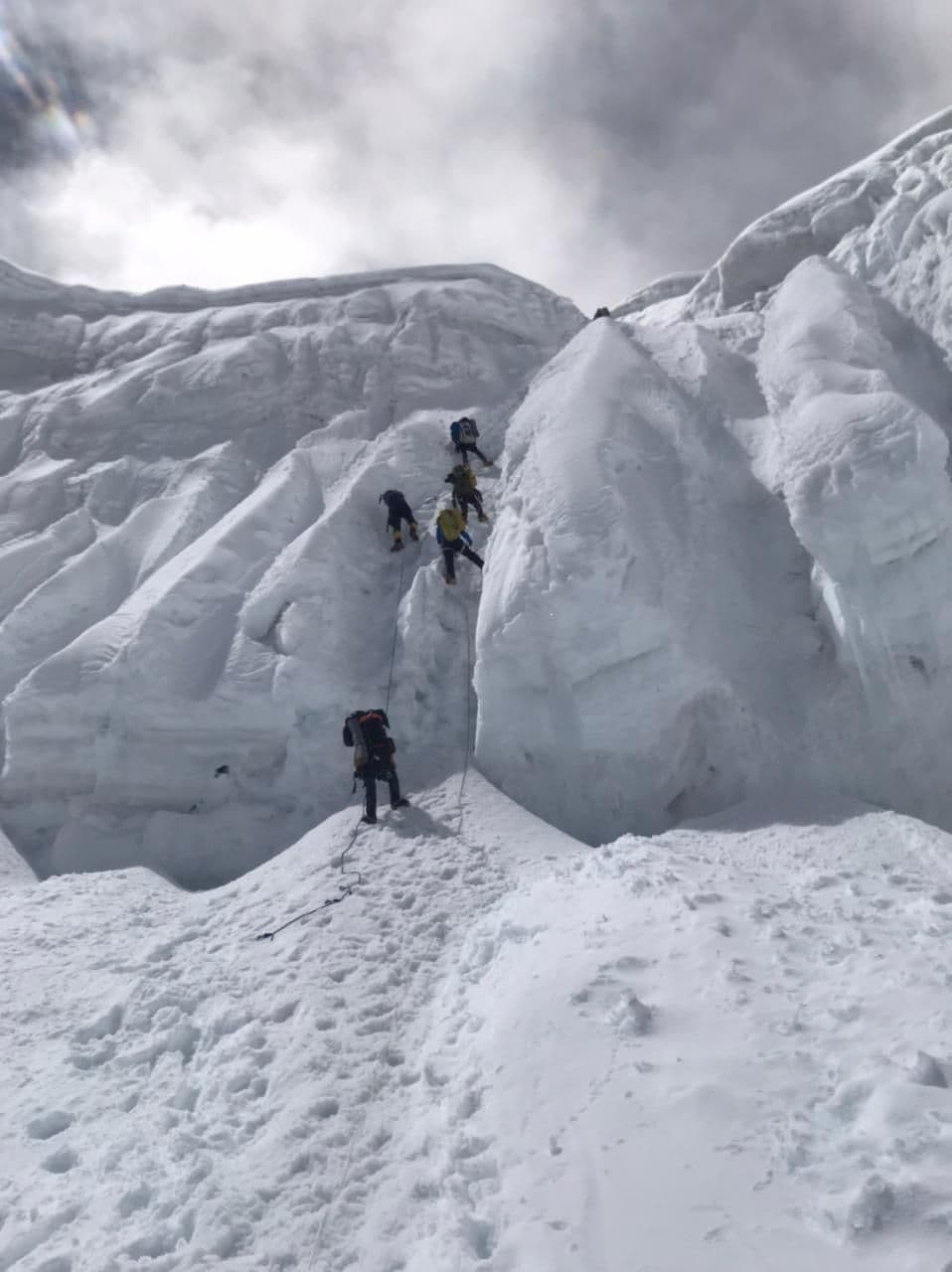
Climbing Training Nepal
Asian Hiking Team organizes climbing training programs twice every year with the goal of building a strong, energetic, and highly skilled professional climbing team.
Asian Hiking Team organizes climbing training programs twice every year with the goal of building a strong, energetic, and highly skilled professional climbing team. These programs are designed not only for our staff, but also for our clients and anyone who is interested in or planning major mountain climbing adventures. Our main objective is to prepare participants physically, mentally, and technically for safe and successful mountaineering.
Climbing is the activity of using one’s hands, feet, and body to ascend steep natural formations. These can range from small rock boulders to the world’s highest mountains. Through climbing, participants develop improved visual perception, balance, coordination, and motor skills as they learn how to place their hands and feet efficiently while moving upward or downward. The best climbers in the world are fit, strong, technically skilled, highly motivated, and able to stay focused under pressure while approaching climbs in a smart and efficient way.
Asian
Trip Facts
Group Size
2-15 persons
Maximum Elevation
5500
Location
Langtang Area (north from Kathmandu)
Accommodation
Lodge and Camping
Transportation
By Bus/jeep
Fingerboards, hang training (very important for climbing), pull-ups, lock-offs, planks, leg raises, squats, step-ups, and pushing with feet (often underrated!),
Precise foot placement, quiet feet, balance, flagging, drop knees, using less energy, resting on the wall.
Route reading, Focus & confidence, Fear management – especially for lead climbing or heights,
Ascend frozen waterfalls and icy rock faces in the breathtaking Himalayas
Safe, professionally guided adventures with top-quality equipment and full support
Yala Peak (5,500m) is one of the easiest and most accessible trekking peaks in Nepal, making it an ideal choice for beginners seeking their first Himalayan summit.
Immerse yourself in the local Tibetan culture and explore Buddhist monasteries, prayer flags, and traditional villages.
Land Transport
- Kathmandu to Syabrubesi by Bus/Jeep (Trekking starting and ending land transport as itinerary).
Accommodation and Meals:
- Accommodation during the trekking: Single/Twin-sharing room with wooden beds, foam mattresses, and blankets (bring a sleeping bag for extra warmth/hygiene). Most of the place have shared toilets (usually Asian-style squat or Western toilets). Some of the place has attached toiled. Hot showers available (on extra cost). Higher up, hot water is scarce.
- Tented Camping: Dom Tent/ matters, all kitchen camping equipment, and cooking fuel during the climbing.
- Meals: Hotel/Lodge/ Tented Camping meals: Breakfast, Lunch and Dinner.
Permits and Entry fees:
- Langtang National Park permit /Entrance fees.
- Local Entry permit / Entrance fees for ice/rock climbing.
Staffs: Guide, Sherpa, Porters:
- Climbing Guide: A First Aid and Eco trained & Government licensed holder professional equipped English-speaking mountaineering Sherpa guide for training.
- Porters: One Porter between each 2 members while on trek (Maximum weight for a porter is 25 Kg). Necessary camping local staff/Yak.
- Accommodation, meals, daily salary, equipment, transportation & Insurance of Asian Hiking Team staffs (guide, Sherpa, porter).
Equipment or gear and souvenir:
- Peak Climbing/trekking Map /Itinerary: Asian Hiking Team provides free a copy of trekking map /trekking/peak Itinerary to our client.
- Group Climbing equipment such as fix ropes, main ropes Ice tool, Ice screws, Ice Bar, Carabineers, Locking carabineers, Short-5- millimeter accessory cords, Slings etc.
- T-short: Asian Hiking Team provide the company T-short for a souvenir.
- Certificate: Asian Hiking Team provide Trekking/Hiking/Tour/Climbing success certificate for your memory and awardees.
Additional features:
- First Aid: First aid is the immediate assistance given to someone who is injured or ill until professional medical help is available. Its goal is to preserve life, prevent further harm, and promote recovery. Asian Hiking Team staff carry the basic first aid. You need to bring your own personal medicine with you. If you are trekking in high altitude should be bringing Diamox for acclimatization (125 mg tabs recommended; enough for a week or more). You can buy here in Kathmandu any pharmacy.
- Travel & Rescue arrangement service: You should bring insurance, must include emergency air ambulance/helicopter rescue services.
Additional Accommodation and Meals:
- Accommodation: Asian Hiking Team provide the hotel during the trekking as itinerary. If you stay an additional day, you need to pay an extra cost.
- Accommodation and Meals in Kathmandu: Hotel, Breakfast, Lunch and Dinner in Kathmandu.
- Hot drinks: Tea/ Coffees/ Hot water, hot showers etc during the hotel/lodge.
- Cold/soft drinks: All cold drinks, alcohol drinks, beer, bottle water etc.
- Snacks: Pack energy bars, nuts, chocolate, or local chyura (beaten rice) for quick energy boosts between meals during the trekking.
Personal Natural Expensive:
- Personal trekking/climbing gears & clothing (some of the equipment is possible to rent in Kathmandu).
- Internet / Wi-Fi/Telephone: There are almost all trekking reason you can buy internet/ Wi-Fi service in the hotel. It is also possible to buy the NCAL or NTC Sim card for telephone or use data.
- Insurance: Medical evacuation in case of emergency, expenses incurred due to mishaps, landslide, strikes, political unrest etc. in such case extra will be charged as per actual.
Tip/donation:
- The tip for guide or porter/ Summit bonus: It's a way to show appreciation for good service and is often left as a small present or in addition. Tips are a common practice in many cultures and are often expected for services.
Tailored add-ons in Nepal trips refer to customizable essentials that enhance and personalize your travel experience. Options include:
- Customized Accommodations: Upgrade from standard lodging to luxury hotels or homestays.
- Helicopter Flights: Opt for helicopter transport to Kyanjin (as for cost, its depends on).
- Cultural & Spiritual Journeys: Include visits to Lumbini, Pashupatinath, tours or local festivals.
- Wildlife Safaris: Extend your trip with a safari in Chitwan (from US$99) or Bardia (US$299).
- Flexible Scheduling: Adjust dates and durations to fit your needs.
- add additional trek to Gosaikunda.
Asian Hiking Team’s Guides/Sherpa are professionals with proven records of honesty and personal integrity, committed to environmentally responsible climbing practices that minimize ecological impact. Our Climbing Guides possess extensive knowledge of all climbing disciplines, local cultures, customs, and religions, and they enthusiastically share these insights with clients. All Guides are fluent in English and speak additional languages upon request. Asian Hiking Team’s Climbing Guides/Sherpa bring years of experience and exceptional expertise in all facets of Nepal mountaineering. Each holds a Nepal Government License, Mountaineering Association Accreditation, and Summit Certificates for Nepal Himalayan peaks. Our high-altitude Sherpa guides are qualified through rigorous training from NMA, TAAN, and NATHAM.
Every climbing guide undergoes comprehensive technical training and possesses practical mastery of:
- Rock, ice, and snow climbing techniques;
- High-altitude camp logistics, setup, and operations;
- Advanced safety protocols for high-altitude camping;
- Fixed-rope climbing, belay techniques, and all mountaineering gear usage;
- Oxygen systems, high-altitude nutrition, and avalanche/mountain rescue techniques. All Mountaineering Guides...
Here’s a detailed guide on getting from Kathmandu to Shyabru Besi (Syabrubesi) and Dhunche, the main trailhead towns for treks like Langtang areas:
Kathmandu to Dhunche / Shyabrubesi 122KM
Public / Deluxe Bus/ share Jeep
Departure: Daily from Machhapokhari (New Buspark) north of Thamel between 06:00–09:00 AM
Journey time: To Dhunche - 4-5 hours and To Syabrubesi 5-7 hours
Shared Jeep: Shared jeeps also leave from Machhapokhari from 07:00 AM to 8AM.
Private Jeep / 4WD Car: anytime possible as your budget
Advantage: Best for Small groups (4–7) or seeking flexibility and comfort.
Journey time: To Dhunche - 4-5 hours and To Syabrubesi 5-7 hours
Additional Tips
Road conditions: Main highways are paved (e.g., via Trishuli), but near Dhunche & Syabrubesi roads turn rough and unpaved.
Hotel/ Lodge: Single/Twin-sharing room with wooden beds, foam mattresses, and blankets (bring a sleeping bag for extra warmth/hygiene). Most of the place have shared toilets (usually Asian-style squat or Western toilets). Some of the place has attached toiled. Hot showers available (on extra cost). Higher up, hot water is scarce.
Tented Camping: Tented camping is a classic and essential part of trekking, peak climbing, and expedition in remote areas of the Himalayas where teahouse accommodation is unavailable. Asian Hiking Team provides Tent (2-person or single occupancy Dom and Box tent depends on area and numbers of days), Sleeping mat (foam or inflatable), Dining tent, kitchen tent, toilet tent (group use - for expedition), Kitchen equipment and utensils (carried by support crew), Power bank or solar charger, heater, Generator (for expedition) etc.
Meals: During the hotel/Guest house trekking, there are international menu so you can choose whatever you like. During the camping,...
Altitude Mountain Sickness (AMS)
Trekking in the Himalayas poses risks of Altitude Sickness (AMS). The body needs time to acclimatize to higher altitudes, a process known as acclimatization.
Types of Altitude Illnesses (Acute Mountain Sickness, AMS)
- High Altitude Pulmonary Edema (HAPE): Fluid in the lungs
- High Altitude Cerebral Edema (HACE): Swelling of the brain
- High Altitude Retinal Hemorrhage (HARH): Bleeding in the retina
Common Symptoms:
- Headache
- Nausea, loss of appetite
- Sleep disturbance
- Dizziness, mild weakness
- Swelling of hands and face
Severe Symptoms (Seek Immediate Descent):
- Severe, persistent headache
- Shortness of breath at rest
- Confusion, loss of coordination
- Bluish lips or face
- Coughing blood-tinged sputum
- Coma or unconsciousness
Prevention Tips:
- Drink 4–5 liters of fluids daily (avoid alcohol)
- Ascend slowly and rest if symptoms appear
- Avoid sleeping at a higher altitude if symptoms persist
- Take Diamox (consult your doctor) before flying to altitude
Food & Water Safety
In Nepal, water and food contamination are common causes of illness.
Do:
- Drink boiled, filtered, or bottled water
- Eat thoroughly...
General Climate Overview
Nepal's climate is incredibly diverse due to its dramatic range in altitude, from the lowland Terai plains (around 60 meters above sea level) to the Himalayan peaks above 8,000 meters.
The country experiences five main seasons: spring, summer, monsoon, autumn, and winter. Kathmandu Monsoons (June–September): Heavy showers, high humidity weekly thunderstorms common in July, with ~324 mm rainfall in July and ~238 mm in August.
Best times: Spring (March–May) and autumn (mid‑Sept to Nov)—clear skies, mild temps (daytime ~25–30 °C, nighttime ~10–15 °C) Winter (Dec–Feb): Cool & dry, lows can approach 0 °C but rarely snow in the valley.
Telephone service in the Langtang-Helambu region is available in towns and villages, but signal strength is unreliable in higher and more remote areas. Most of the place has local telephone. Both Nepal Telecom (NTC) and Ncell are the main mobile providers, with NTC generally offering better coverage in the mountains, though Ncell is faster in lower-lying towns. You can buy a local SIM card in Kathmandu. NTC/NCELL SIM cards work in most areas along the Langtang trekking route; however, network coverage is unavailable upper Langtang valley, Tilman pass, Ganjala Pass, Lauribina pass. In case of emergencies, a satellite phone is used for communication.
Ice Axe/Ice Hammer: : Bring a lightweight axe with a pick that will stick easily in hard glacier ice. Attach a lightweight wrist leash that is usable for climbing steeper terrain.
Boot : Double Climbing Boots with expedition liners: Make sure your crampons can be adjusted to fit them. Or for the peak climbing you can use plastic boot too.
Crampons : These must be sharp and must fit your boot perfectly.
Harness : Make sure the buckle is easy for you to thread in cold conditions! Gear loops will be useful for this trip, as well as adjustable leg loops.
Helmet : Be sure you can comfortably fit a warm hat underneath.
Hardware : Bring 2 locking and 3 lightweight regular carabineers. It is helpful if at least one of the locking carabineers has a "key gate", like the Petzl Attaché. Our guide have Ice tool, Ice screws, Carabineers, Locking carabineers, Short-5- millimeter accessory cords, slings.
Ascender / rappel : Bring one handled ascender, Rappel for descend and one Petzl Tibloc for ascending the fixed rope.
Hiking Boot : These boots provide more stability and ankle protection against protruding limbs and rocks than hiking shoes do. Mountain walking or hiking boots are designed for mountain and hill walking, backpacking and mountaineering.
Jacket : Lightweight waterproof-breathable construction with a hood -20 Down Jacket.
Necessary Climbing Clothes: : Pants: Lightweight waterproof-breathable shell pants or bibs with full-length leg zippers. ALSO, very useful are synthetic insulation full-zip pants, for example, Mountain Hardware Compressor Pants--for evenings and cold summit days or down paint. Mid-Layers: Fleece or Soft Shell layering pieces that work well with the rest of your clothing. A Soft Shell jacket and an expedition weight long john top will work well. Climbing Pants: Look for construction that provides freedom of movement and/or stretch materials. Fabric should be a breathable synthetic that preferably holds up to abrasion. Base Layers: - 2 synthetic tops and 1 bottom. Zip neck tops are the way to go. Mittens: Fleece mittens with an over mitten. Nothing competes with a mitten for warmth when the going got tough. Ski Gloves/Light Gloves/ Leather gloves: A warm insulated glove with leather palm will be worn a lot of the time. Polypropylene or fleece. Leather palms handle the fixed line better. Or good abrasion resistant climbing glove for the rock sections. Trousers: Water-resistant hiking pants (for TK), North Face and Patagonia are good brands, avoid jeans, pants with zip-off legs can come in handy. T-Shorts: 1/2 pair of t-shorts (for TK), walking shorts. Loose and comfortable, preferably nylon, which (for men) double as a swimsuit. (Avoid shorts which are too revealing.) T-shirts (TK/TR). Over-shirt: 1 long-sleeved over-shirt, light to medium weight and breathable, to protect you from the sun and bug bites. Hemp, linen or cotton is recommended. Belt: 1 belt, cotton or nylon lashing strap doubles as a gear strap. Hat: Wool or fleece stocking hat with ear protection and Sun hat. Neck Gaiter and/or a Buff (highly recommended), Baseball hat and Bandana. Underpants/panties, Bra: 2–3 pairs.
Trekking Poles : Poles come in handy for balance and easing impact to your knees. Get collapsible poles that can attach to your backpack and fit into your Duffel.
Backpack : You may choose to bring a smaller "day pack" for your airline travel carry on, and this can be used on the trek if you want to carry a smaller (35 liter or so), light trekking pack. You need a pack big enough for your clothes, water, camera, food, etc. during the day. Pack Cover: Waterproof rain cover for your trekking pack.
Sleeping Bag : Bring a sleeping bag comfortable to -20 for trekking, however it is better to bring -30 for climbing. During the trekking in hotel/guest house -20 is fine but on the tented home you need -30. Down is lighter and much more compressible. Keep in mind that many of your nights will be much warmer than -20, especially on the trek in to base camp.
Duffel Bags : Asian Hiking Team provide one duffel bags to each member as you want. We normally pack all our equipment in large Duffel bags. Make sure they are well labeled with indelible ink as well as a travel tag. The duffels go on the trek/climb with you and will be carried by porters or yaks. Except for them to get wet and muddy, so rugged, waterproof duffels are good. Bags with wheels are nice for the airport, but the porters and yaks don't like to carry them, so don't bring wheeled bags (or at least not two of them). You will also store some travel clothes at the hotel in Kathmandu while trekking, so a small additional bag with a lock might be handy. Bring 5 large plastic garbage bags to pack gear inside duffels to protect gear from rain.
Others Accessories : Headlamp: Bring a good LED headlamp with 2 sets of lithium batteries for cold conditions. Water Bottles: 2 wide mouth plastic water bottles with insulated covers. A small Thermos bottle is great for cold mornings. Bring a pee bottle too (optional: Water purification: Iodine tablets (Potable Aqua or similar) or iodine crystals (Polar Pure). One bottle of Potable Aqua (enough to treat 25 liters) should be more than sufficient. Eyewear: Bring good sunglasses with side protection. For contact lens wearers, ski goggles with light color lenses (for use at night) might be useful in windy conditions. The ski goggles are essential for all climbers in really stormy conditions and can serve as an emergency backup for broken or lost sunglasses. Vision correction: Bring extra prescription eyeglasses or contact lenses if you wear them. Lens solutions are not widely available in Nepal, bring enough for the duration. Wrist Watch: With alarm and night light. An altimeter watch is useful.
First Aid : Hand sanitizer (Pirelli), moleskin or Compete, athletic tape, aspirin (some climbers take a baby aspirin every day up high) and/or ibuprofen / acetaminophen, Imodium, Band-Aids, antacid, insect repellant, ear plugs, and two rolls of toilet paper in quart Ziploc bags (we will have a supply at Base Camp), small towel, soap/shampoo. Prescription Medications: Antibiotic for upper respiratory problems, Antibiotic for GI problems, Diamox for acclimatization (125 mg tabs recommended; enough for a week or more), Tylenol 3 or similar for severe headaches, Asthma medication, if any history.
Skin Care : Sun block lotion (at least #30 protection factor -- have at least one smaller tube (1 oz) that can fit in your pocket) and lip salve. Put your lip protection on a string and hang it from your neck. That way you'll use it. It also works great for your nose.
Travel Items: : Passport (valid for at least 6 months): It is easy to get your Nepal visa on arrival in Kathmandu at the airport, bring a passport photo. Bring a copy of the information pages and a couple of extra passport photographs. Carry these in a separate location. You'll be glad you did if you ever lose a passport. Camera: with spare batteries, and film or memory cards, but keep it reasonable and weight. Consider a small USB drive to make it easy to share photos with your teammates. Bathing Suit: Towel, Toothpaste and brush, floss, mini hairbrush, razor, soap, mini bottle of shampoo, travel mirror, nail clippers etc. Travel Wallet: Some type of secure travel wallet is a must. Remember a pen for travel documents. MP3 Player and Books: As you want to read on the way to trekking. Plan on sharing books on hotel/guest house or MP3 player. Chemical Hand Warmers (not compulsory).